Article #21
Published: 19 October 2026
By Stan van Gemert | S10 Group
By Stan van Gemert
Why resilience changed series

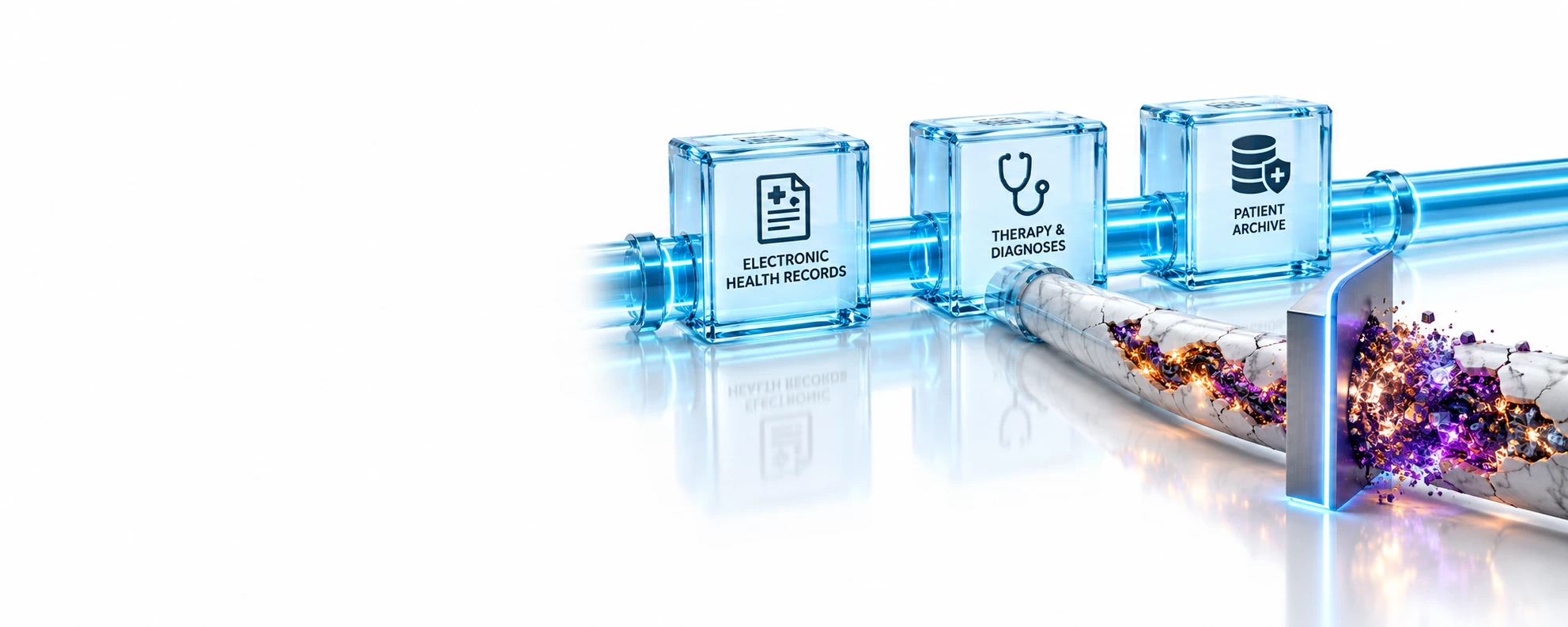
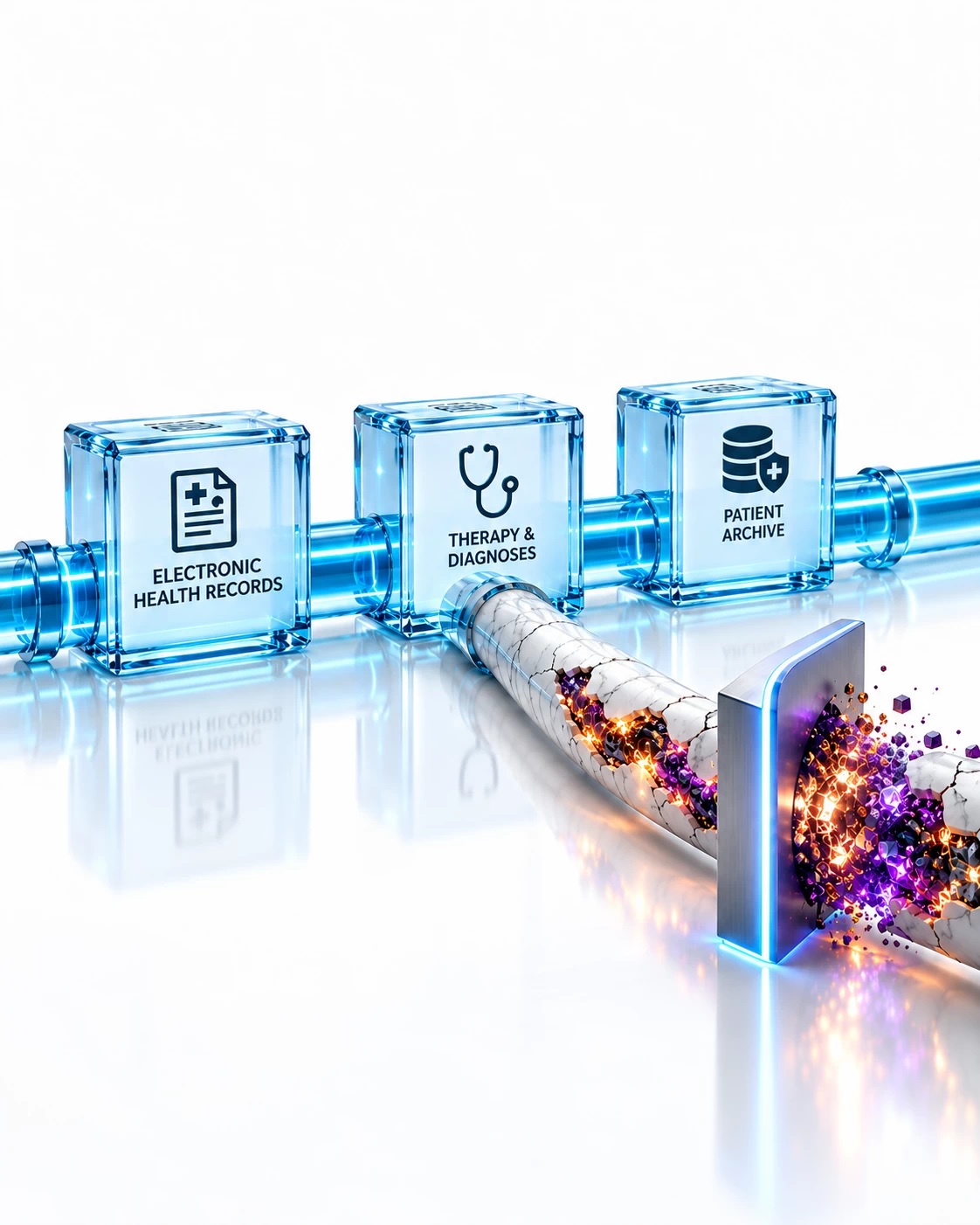
The previous publication, "The Foundation Failed While the Building Still Stood", showed how shared hosts, storage, identity and management layers can place apparently separate services inside one incident boundary. Restoring those foundations can return operational capability, but it cannot retrieve information that has already left your custody.
"When Patient Data Becomes Long-Term Leverage" examines that irreversible consequence. Copied diagnoses, therapy notes, claims histories and identifiers can sustain pressure after services return because recovery restores availability, not confidentiality. Your organisation therefore has to control sensitive-data reach and movement before exposure becomes leverage against patients as well as the institution.
The next publication, "The First Hours Are No Longer Private", moves from lasting exposure to immediate external pressure. It asks how your teams should communicate when patients, customers, partners or the media need usable guidance before the investigation can provide a complete answer.
Systems are coming back. Clinical teams can log in, appointments are moving, billing can resume and the recovery dashboard is beginning to look less red. Your executive update can finally describe operational progress. Yet your organisation may still be carrying the part of the incident that cannot be restored: the privacy of patients whose most sensitive information has left your control.
A server can be rebuilt, a directory recovered and a damaged environment replaced from clean infrastructure. Once therapy notes, diagnoses, claims histories or patient identifiers have been copied, however, recovery reaches a hard limit. You can restore availability; you cannot restore exclusive custody of every copy.
Patient data therefore changes how resilience must be measured. The outcome depends not only on how quickly care resumes, but also on how long stolen information can be used to pressure patients, regulators and the institution.
Sophos’s 2025 study covered 292 healthcare providers that had experienced ransomware during the previous year. Across the survey series, the proportion of attacks that encrypted data fell from 74% in 2024 to 34% in 2025. Over the same period, extortion-only attacks, where data was not encrypted but a ransom was still demanded, reached 12%, three times the 4% reported in 2022/23.
The movement is not a simple replacement of encryption by data theft. Encryption remains a serious operational threat. The figures show, however, that copied data can sustain an extortion demand even when availability is not the attacker’s main source of leverage.
Sources:
Sophos - The State of Ransomware in Healthcare 2025
https://www.sophos.com/en-us/blog/the-state-of-ransomware-in-healthcare-2025
Sophos - 2025 healthcare report
https://www.sophos.com/en-us/resources/white-papers/state-of-ransomware-in-healthcare
Evidence boundary: the survey supports a narrow trend claim. It does not establish a universal healthcare rate, prove that encryption is becoming irrelevant or predict the outcome of any individual incident.
Note: the survey supports a narrow trend claim. It does not establish a universal healthcare rate, prove that encryption is becoming irrelevant or predict the outcome of any individual incident.
Sensitive data gives the attacker another route. It can be sampled, sorted, published or used to approach the people behind the records. A hospital may keep operating while the crisis moves beyond its technical perimeter.
By the time your executive team sees the demand, the asset creating leverage may already be beyond any boundary your organisation can enforce. A backup can restore availability; it cannot restore confidentiality.
The Vastaamo psychotherapy breach in Finland made that change painfully clear. Sensitive information and therapy-session notes belonging to more than 30,000 clients were disseminated, and victims faced attempted extortion. Pressure no longer remained between an attacker and the affected provider; it reached the people represented in the records.
The lesson is not simply that healthcare data is valuable. A therapy note is not merely another field in a database, and a diagnosis cannot be separated from the person it describes. Reproductive-health information, addiction treatment, psychiatric history or genetic information can create pressure because disclosure may affect family relationships, employment, insurance or a person's willingness to seek care.
The executive question therefore changes from whether the service can be restored to what the attacker may still do with the people behind the data.
Vastaamo demonstrates direct human leverage. Finnish police reported the dissemination of sensitive information belonging to more than 30,000 psychotherapy clients and attempted aggravated extortion of victims. Pressure moved beyond the affected provider and reached the people represented in the records.
Medibank demonstrates national-scale institutional exposure. Medibank reported that information relating to about 9.7 million current and former customers and some authorised representatives had been accessed. Stolen data was subsequently released, while regulatory proceedings and the wider response continued long after the initial incident.
Conduent demonstrates how the visible scale can continue to grow. Conduent confirmed that an attacker exfiltrated files associated with some of its clients and that the affected datasets contained personal information belonging to their end users. Systems returned to normal operation within days, and in some cases hours, but analysis, client notification, litigation and associated costs continued. A settlement agreement filed in October 2026 refers to private information belonging to approximately 62 million people. The ransomware group SafePay separately claimed to have taken about 8.5 TB of data; that volume has not been independently confirmed.
The 2026 disclosures show that the concentration is continuing. The HHS breach portal lists 15 million people in connection with DentaQuest and more than 9.5 million in connection with Aesto Health, a provider of healthcare data-migration and archiving services. Aesto stated that protected health information belonging to patients of several healthcare clients may have been accessed or acquired. These cases show why exposure can reach patients who may never have had a direct relationship with the provider where the compromised data was stored.
Change Healthcare demonstrates ecosystem concentration. The US Department of Health and Human Services records approximately 192.7 million affected individuals. UnitedHealth Group was restoring pharmacy, claims and payment services while the data review and notification process continued. The combined record illustrates how operational recovery and exposure management can proceed on very different timelines.
Aesto Health demonstrates the archival and migration risk. Aesto provides healthcare data-migration and archiving services. Following an incident in December 2025, its investigation found that protected health information belonging to patients of multiple healthcare clients may have been accessed or acquired. The HHS breach portal lists 9,540,683 affected individuals. The incident shows how one shared repository can concentrate consequences across clients even when it is not part of their live clinical environment.
Evidence boundary: the incidents differ in method, scope and confirmed outcome. Reported affected-person totals do not prove that every record was misused or that every patient experienced direct extortion. Aesto stated that it had found no evidence of identity theft or financial fraud connected with its incident. The cases collectively demonstrate expanding reach, not identical consequences.
Sources:
Finnish police - Vastaamo criminal investigation
https://poliisi.fi/en/-/criminal-investigation-into-vastaamo-hacking-case-completed
Finnish Government - Vastaamo data-protection decision
https://valtioneuvosto.fi/en/-/6927448/administrative-fine-imposed-on-psychotherapy-centre-vastaamo-for-data-protection-violations
Medibank - cybercrime update
https://www.medibank.com.au/livebetter/newsroom/post/medibank-cybercrime-update1Dec
OAIC - civil penalty proceedings
https://www.oaic.gov.au/news/media-centre/oaic-takes-civil-penalty-action-against-medibank
U.S. Department of Health and Human Services
U.S. Department of Health and Human Services - HIPAA Cases Currently Under Investigation
https://ocrportal.hhs.gov/ocr/breach/breach_report_hip.jsf?entry=claremedica-viking-llc-07-08-2026
United States Securities and Exchange Commission - Form 10-K
https://www.sec.gov/Archives/edgar/data/1677703/000167770326000024/cndt-20251231.htm
Note: several investigations, proceedings and notifications remain active. Confirmed facts, reported totals and attacker claims should therefore remain clearly separated. The developing picture is itself relevant: technical recovery can finish long before the full human and institutional exposure becomes known.
Large-scale exposure creates several consequences at different speeds. Services may recover while regulatory enquiries, legal proceedings, victim support and notification continue. Patients may also change what they disclose or whether they seek care at all, even when no system remains offline.
Not every breach produces those outcomes, and none should be treated as inevitable. The durable risk is enough to change the control question: what sensitive information can still be reached, copied and used while your teams are restoring the wider environment?
Backups and tested recovery remain essential. Healthcare cannot abandon availability merely because exposure has become a greater part of the threat.
A backup can return data to your organisation, but it cannot retrieve every copy held by an attacker. It can restore a workload, but it cannot make a disclosed diagnosis private again. It can reduce downtime, but it cannot remove the threat of publication.
Your organisation can therefore succeed at technical recovery and still face a continuing resilience failure. Recovery measures what came back. Exposure control addresses what should never have left.
Once sensitive data has been exfiltrated, the range of good options narrows. Investigation, notification, victim support, regulatory engagement and accurate communication all matter, but none can reverse the copying event. The decisive window sits earlier. Your teams need to know which repositories could create the greatest human consequence, who and what can reach them, how data could be staged or moved, and who may narrow those routes while the facts remain incomplete.
Care-critical operations cannot be frozen at the first anomaly. The practical objective is more precise: isolate suspicious activity, restrict reach, interrupt harmful movement and preserve essential care without turning every defensive action into a second operational crisis.
Those boundaries must be designed before the ransom note. During an incident, your executive team will not have time to invent the trade-off between protecting patient care and protecting patient data.
The target is not perfect certainty. It is bounded exposure: enough control to reduce what an attacker can still reach, move and use while the wider incident is being stabilised.
Our platform is designed to change the course of an active cyber incident after an attacker has entered your environment. It gives authorised teams executable control to interrupt ransomware, prevent data theft, detect and stop lateral movement, and protect virtual infrastructure before a foothold becomes a wider healthcare crisis.
Ransomware Containment is the core platform. It monitors supported SMB and NFS file activity and automatically isolates the user or session responsible when active ransomware encryption is detected.
Server Intrusion Protection (SIP) and Virtual Server Protection (VSP) are additional features operating on the same platform, not separate platforms.
Server Intrusion Protection detects and interrupts unauthorised server access, including activity performed through compromised administrator credentials that could lead to lateral movement, data theft or the destruction of backups.
Virtual Server Protection safeguards supported VMware and Hyper-V environments against attacks directed at the virtual-infrastructure layer.
These capabilities complement your existing prevention, EDR, SIEM, identity, DLP, network and incident-response controls by adding the ability to intervene when malicious activity is already underway.
In healthcare, earlier containment reduces the systems, identities, data paths and shared environments available to an attacker. That can prevent patient data from becoming long-term leverage while preserving more operational room for essential care, investigation and recovery.
Healthcare teams are accustomed to recovery points, recovery times and service restoration. Patient-data leverage introduces another measure: the interval between compromise and the moment confidentiality becomes unrecoverable.
That window may close while systems still appear healthy and before your executive team meets. Resilience therefore requires more than a plan to bring systems back. It requires control over what an attacker can carry forward from the incident.
The most damaging part of a healthcare breach may not be the outage everyone can see. It may be the copy no one can retrieve. Once patient data becomes leverage, the crisis belongs not only to the affected institution, but also to the people behind the records.
"The First Hours Are No Longer Private" examines the moment before the facts are complete but after the incident has become visible to others. It asks how your organisation can give patients, customers and partners a useful first answer, preserve evidential limits and keep communication connected to verified action.

Wednesday 21 October, Leadership-series #7: "The First Hours Are No Longer Private"
Friday 23 October, Operational Attack-series #7: "The Service Elevator Became the Attack Path."