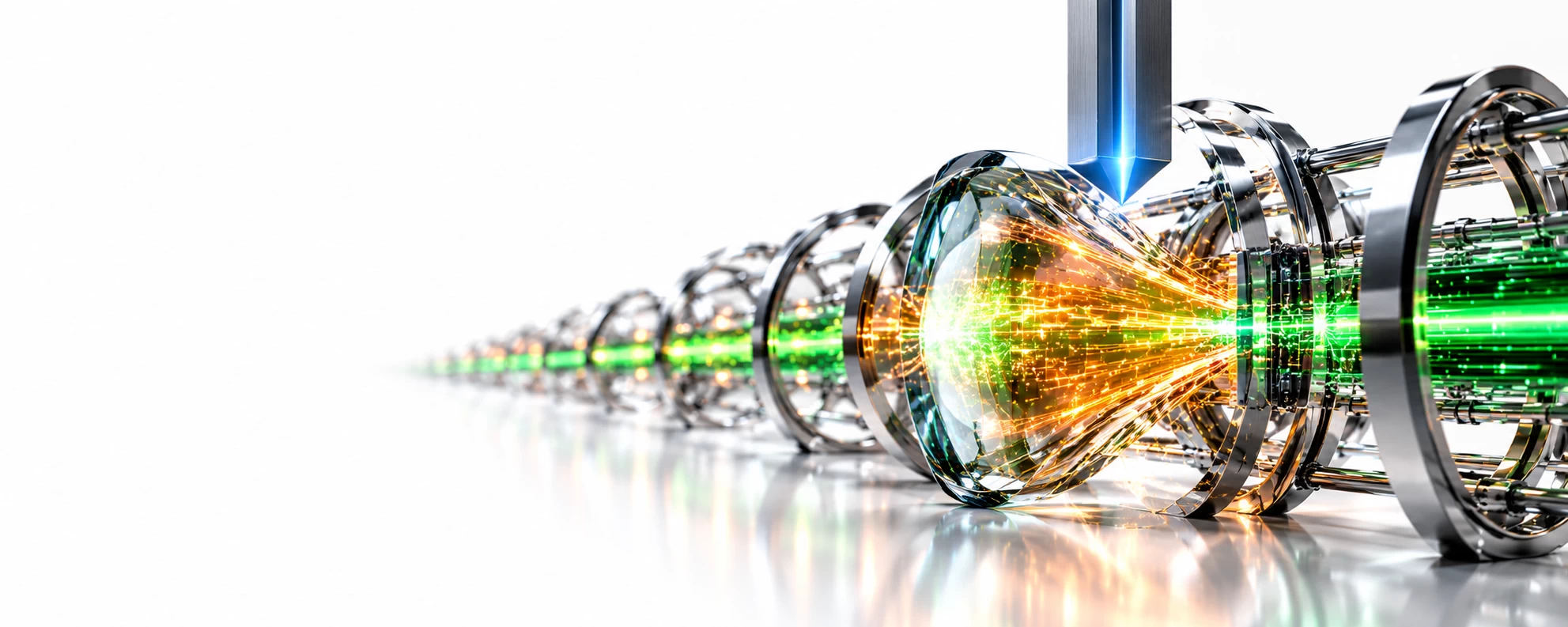


Red and green streams meet in a glass prism held by blue-lit clamps, illustrating human control of AI cyber defence.Red and green streams meet in a glass prism held by blue-lit clamps, illustrating human control of AI cyber defence.
Part of AI, Speed and Loss of Control

The Human Decision Layer

Why machine speed cyber response still requires human accountability
bounded autonomy and a working emergency brake

The action took seconds and the consequence lasted much longer

An automated security system identifies suspicious administrator activity and closes the route before the incident call has agreed what is happening. The threat may have been stopped, but a payment service, clinical workflow, production dependency or recovery account may also have been interrupted.

Speed changes the technical sequence. It does not transfer responsibility to the model, the workflow or the security vendor. People still have to explain why the action was permitted, whether its scope was proportionate, what it disrupted and who could have stopped or reversed it.

The opposite failure is equally serious. Requiring human approval for every defensive action can leave a known attack path open while context is assembled and authority is sought. During that interval, an attacker can continue reconnaissance, collect credentials, identify backups, move laterally and prepare data theft or encryption.

The human decision layer sits between those two failures. Its purpose is not to make people faster than machines. It is to define where automated action is acceptable, where supervision is required, where a person must decide and how accountability remains visible after the event.


AI compresses time. It does not compress accountability.

Automation changes the control problem

Cyber defence has always involved trade-offs, but automation moves those trade-offs into the operating path. A system that only advises leaves the final action with a person. A system that can disable access, isolate a workload, change a configuration or block a route can alter the state of the business before an incident team has a complete picture.

Attackers face fewer of those constraints. They do not need a continuity review before trying another credential or adapting a failed step. Defensive action has to protect the business without becoming a second source of disruption. That asymmetry explains why machine-speed defence cannot simply mirror machine-speed offence.

Accuracy alone does not resolve the problem. A technically correct action can still have an unacceptable operational consequence. A cautious delay can preserve service for a few more minutes while giving malicious activity time to expand. The right control model must account for both the threat and the effect of the response.

Governed speed means that the difficult choices have been designed into the operating model before pressure arrives. Scope, reversibility, criticality, escalation and intervention cannot be improvised after an automated action has already changed production, care, payment or recovery.

Three models for human authority

Human oversight is not a single setting. The appropriate model depends on what the system can change and how difficult that change would be to reverse.

Human oversight is a design choice, not a checkbox

The UK National Cyber Security Centre distinguishes human-in-the-loop, human-on-the-loop and human-out-of-the-loop operation. For higher-risk uses, it recommends named responsibility, continuing human oversight and technically enforced controls that allow unintended activity to be stopped.

NIST’s AI Risk Management Framework reaches the same underlying conclusion from a broader governance perspective: roles and responsibilities for human–AI configurations should be clearly differentiated, while accountability structures must empower identified teams and individuals to manage AI risk.

A second NCSC analysis adds a practical way to judge automated defensive actions: consider their potency, scope, criticality, rollout confidence and recoverability. The more an action can change, the wider it reaches and the harder it is to reverse, the stronger the case for human control around it.

Sources:

UK National Cyber Security Centre - Managing the cyber risk of agentic AI
https://www.ncsc.gov.uk/blogs/managing-the-cyber-risk-of-agentic-ai

UK National Cyber Security Centre - One does not simply defend agentically
https://www.ncsc.gov.uk/blogs/one-does-not-simply-defend-agentically

NIST - Artificial Intelligence Risk Management Framework (AI RMF 1.0)
https://nvlpubs.nist.gov/nistpubs/ai/nist.ai.100-1.pdf

Note: The three models describe different positions for human oversight; they do not rank them. The appropriate choice depends on the specific action, its business consequence and whether the outcome can be contained or reversed.

View more details chevron A white downward-facing V-shaped chevron on a transparent background.
View more details
Close more details

Human in the loop

The system analyses or recommends; a person approves the action before it happens. That model is appropriate when an action could materially affect safety, continuity, recovery or a critical dependency. Its strength is explicit control. Its weakness is the time required to reach and authorise the decision.

Human on the loop

The system acts within defined limits while people supervise, receive alerts and retain the ability to intervene. Speed is preserved because every permitted action does not require a fresh approval. Control depends on narrow scope, reliable monitoring, a named owner and a technically usable way to pause, limit or reverse the action.

Human out of the loop

The system acts without human review. Full autonomy can be appropriate for narrow, well-tested and reversible actions with a known impact. The risk rises sharply when the same model is extended to high-potency actions across critical or poorly understood environments.

No model is universally correct. A low-consequence action may be safer when automated immediately, while the isolation of a critical environment may require supervision or approval. The decision should follow the action’s scope and consequence, not enthusiasm for autonomy or a blanket demand for human control.

Human oversight must not become human delay

Placing a person in the approval path can look responsible while leaving the real bottleneck untouched. If the approver lacks current context, cannot reach the necessary control or has to negotiate authority during the incident, the human layer becomes a queue rather than a safeguard.

Effective oversight gives people a specific role. They may define the allowed scope before deployment, supervise live actions, intervene when a threshold is crossed or approve only the small number of moves that carry exceptional consequence. Human attention is then reserved for judgement rather than used as a compulsory click in every workflow.

The distinction matters when the attack is already active. A compromised identity may be mapping servers and searching for backup infrastructure while the incident call debates ownership. A suspicious data flow may continue while several teams try to determine whether blocking it will affect a client or supplier. Oversight has value only when it can change the path in time.

Humans do not need to approve every action.
They need control over the actions that can change the business outcome.

The emergency brake has to work

Every system capable of consequential action needs a clear answer to a simple question: who can stop it? The answer cannot be a person’s name without a technical mechanism behind it.

A working emergency brake may pause an automated workflow, constrain its permissions, reduce the systems it can reach, revoke a credential, restore a previous configuration or require approval before the next step. The exact mechanism varies, but three properties remain constant: it is accessible to the right people, it acts within the required time and its use does not depend on the same service that may already be affected.

Reversibility deserves equal attention. Stopping an automated action is only part of control if the resulting change can be understood and, where appropriate, undone without creating a new inconsistency across identities, dependencies or shared services.

An emergency procedure stored in a policy document is not an emergency brake. The control must exist in the operating environment, be tested against realistic failure modes and remain available when the normal management path is uncertain.

Accountability remains human

Automated action can distribute responsibility across a model provider, security vendor, policy owner, integration team, service owner and incident commander. Diffusion does not remove accountability; it makes accountability harder to locate precisely when an explanation is required.

“The system decided” is not a credible account of a disrupted service or a missed intervention. Your executive team needs to know which objective the system was pursuing, which limits applied, who accepted the operating model and who could intervene. Your technical teams need logs that show what the system observed, what it changed and whether the action stayed within its defined scope.

The record should preserve the context available at the time. Later review will have a fuller incident picture and may make a proportionate decision look obvious in hindsight. A clear chronology separates what was known from what was assumed and shows why an automated or human action was considered reasonable at that moment.

The machine can act.
Accountability remains human.

Resilience also depends on what can continue without central control

Human authority is often discussed as though every decision must travel through one central control room. A resilient operating model also defines what can continue safely when central visibility, remote administration or normal communication is unavailable.Local safeguards, constrained permissions and degraded operating modes can preserve a viable service while the wider incident is investigated. They do not eliminate the need for coordination. They prevent one damaged control path from automatically stopping every dependent process.

Remote control failed across at least 30 energy sites; generation continued

CERT Polska reported coordinated destructive attacks on at least 30 wind and solar farms on 29 December 2025. The attacker damaged industrial control and communications equipment after reconnaissance and partially automated destructive activity.

Communication with distribution-system operators and remote control were lost, but the affected sites continued producing electricity. CERT Polska also reported that the attacks did not affect the stability of Poland’s transmission system during the period examined.

The useful resilience lesson is architectural: central visibility and remote control can fail without every local process failing at the same moment. Pre-existing separation, local operation and bounded dependencies can preserve service while control is restored.

Sources:

CERT Polska - Report on the energy-sector incident of 29 December 2025
https://cert.pl/en/posts/2026/01/incident-report-energy-sector-2025/

CERT Polska - Full technical report: Incident in the energy sector 29.12
https://cert.pl/uploads/docs/CERT_Polska_Energy_Sector_Incident_Follow_up_Report_2025.pdf

Note: CERT Polska did not present the incident as an AI case or describe it using the human-in/on/out-of-the-loop framework. The case supports the narrower point that bounded local operation can preserve continuity when central communications and remote control are damaged.

View more details chevron A white downward-facing V-shaped chevron on a transparent background.
View more details
Close more details

The 29 December 2025 attack illustrates the distinction. At least 30 wind and solar sites lost communication and remote control after industrial devices were damaged, yet current electricity generation continued and the national transmission system remained stable. The outcome did not make the attack harmless, but it showed that loss of central digital control does not always have to become immediate loss of the physical service.

The same principle appears differently in other sectors. A clinical service may need a safe local procedure, a manufacturer may need a constrained production mode, and a financial service may need a protected transaction path. The design question is not whether every activity can continue. It is which essential activity can remain bounded when the normal control layer is no longer reliable.

The most resilient businesses define boundaries before one compromise tries to cross them.

Human authority needs real technical options

A decision right has little operational value when no safe action exists behind it. Someone may be authorised to isolate a route, preserve a service or begin recovery, yet still lack the control needed to do so without shutting down far more than the threat requires.

Technical design therefore determines the quality of the choices available to people. Segmented dependencies, protected recovery points, constrained administrative access and defined containment actions can keep several options open. Their value is not that an executive decision activates them; it is that they prevent authority from becoming a paper promise when the incident is already moving.

Immutable recovery belongs in that design, but it should not be confused with live containment. Protected recovery points help teams rebuild from a known state after damage. Containment stops active malicious progression before more systems, identities, data paths or backups are drawn into the breach. Resilience requires both functions, with their roles kept clear.

The human decision layer is strongest when people can see what an automated system may change, understand the consequences of intervention and retain workable alternatives if the automated response is wrong or the attack reaches beyond its scope.

Where our platform fits

Our platform provides a defined technical response when prevention has been bypassed and malicious behaviour is active inside the environment. It detects and stops progression within the capabilities deployed, preventing an attack that would otherwise continue through files, identities, server access or virtual infrastructure.

Ransomware Containment is the central platform. It monitors supported SMB and NFS file activity and automatically isolates the responsible user or session when illegitimate active encryption is detected. Server Intrusion Protection and Virtual Server Protection are additional features running on the platform, extending protection to hostile server access, reconnaissance, lateral movement, data theft, attempts to damage backups and attacks against supported VMware and Hyper-V environments.

Those technical actions do not wait for an executive team to translate policy into a live command, nor do they perform the wider human responsibilities described on this page. Your executive, operational and incident-response teams remain responsible for service priorities, acceptable disruption, reporting, communication and recovery across the wider crisis.

The contribution is direct: active malicious progression is detected and contained, removing time and reach that the attacker would otherwise use for further reconnaissance, credential abuse, data theft, backup destruction or encryption. Your teams can then investigate the cause and manage the wider response after the attack path has been stopped rather than while it is still expanding.

Our platform stops active malicious progression.
Human accountability governs the wider response.

Questions that expose the human decision layer

The strength of the operating model becomes visible through a small number of practical questions:

  • Which defensive actions can occur automatically, and what prevents them from moving beyond their intended scope?
  • Which actions require supervision or approval because they could affect safety, continuity, recovery or a critical dependency?
  • Who is named to monitor, pause, narrow or reverse an automated response?
  • Can that intervention still be executed if the normal identity, management or communications path is affected?
  • Which essential services can continue in a bounded mode when central visibility or remote control is lost?
  • Can your teams reconstruct what the system observed, what it changed and why the action was permitted?

Weak answers reveal more than an AI governance problem. They reveal where speed, authority and technical control separate under pressure.

The question has moved beyond how much can be automated

The useful question is no longer whether AI can detect, decide or act faster. It can. The harder question is whether your business has chosen the right form of human control around each consequential action and preserved the technical means to intervene when necessary.

Too much approval can surrender the decision window. Too much autonomy can turn the response into a second incident. Governed speed avoids both extremes by matching oversight to consequence and by keeping accountability visible from design through operation and review.

The machine may act in seconds. The outcome will still be explained, defended and carried by people.

If an automated security action were wrong, who could stop it before it became the second incident?

Curious how our platform stops the cascade?

Meet with us for a focused presentation of how the platform detects and contains active malicious behaviour across the capabilities deployed.

We can use relevant incident scenarios to show how Ransomware Containment and the additional platform features change what an attacker can reach, steal, damage or encrypt.

If useful, the next step can be a controlled active ransomware-encryption assessment with your existing controls left active, first without Ransomware Containment and then with it. Your controls respond in the same way; the outcome changes because our platform limits what the ransomware can reach and encrypt.

DISCUSS THE PLATFORM WITH US

Further readings