


Our platform interrupts malicious behaviour before it can spread, encrypt, or
force wider operational shutdown.
The real resilience gap is not detection. It is preventing one compromised point
from becoming the whole organisation’s problem.


One platform. Three operational protection layers.
One purpose: stop the incident from turning into cascade.
Together,
these
capabilities
create
an
additional
containment
layer
focused
on
what
happens
after
entry
risk
becomes
real:
hostile
movement, active encryption, unsafe access paths, and the widening of blast radius across critical systems.
How our platform fits into your existing stack
Our
platform
is
designed
to
complement
your
security
stack
already
in
place.
It
is
not
intended
to
replace
prevention,
monitoring,
or
recovery
tooling.
It
sits
alongside
them
as
a
dedicated
operational
containment
layer,
helping
organisations
act
when
speed,
trust,
and
blast
radius
matter
most.
It
integrates
with
any
SIEM,
NAC
or
other
security
solutions
via
2-way
RESTful
API
and
is
fully
compatible
with
your
existing
security
environment.
Its
value
lies
in
making
those
environments
more
governable
once
pressure
becomes operational.
Our platform strengthens the value of the stack you already have by helping it
become more executable under pressure.
Our platform is not there to describe the incident better.
It is there to help change its trajectory.
Core capabilities at a high level: three operational protection layers
Modern
ransomware
does
not
start
with
encryption.
It
starts
with
access,
reconnaissance,
lateral
movement,
data
discovery,
backup
interference,
and
preparation
for
impact.
Encryption
is
often
the
visible
end
of
a
process
that
has
already
been
unfolding
inside the environment.
S10
Group
is
designed
for
that
active
phase:
when
malicious
behaviour
is
already
present,
but
spread,
exposure,
and
operational
impact can still be contained.
Our containment layers help organisations move from detection to action by focusing on three operational layers:
Reduce spread
Contain movement before ransomware reaches more users, servers, file shares, or virtual environments.
Protect data
Limit suspicious access and data movement before stolen information becomes additional leverage.
Preserve operations
Protect critical systems and maintain room to operate while the incident is being stabilised.
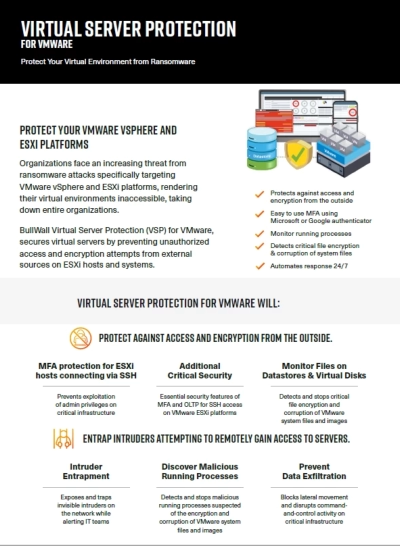
3. Virtual Server Protection
Virtual
Server
Protection
is
focused
on
virtual
infrastructure
such
as
VMware
and
ESXi
environments.
Its
role
is
to
reduce
the
risk
that
attackers
can
use
privileged
access,
malicious
processes,
or
encryption
attempts
to
render
virtual
environments
inaccessible
or
to damage the systems that support wider business continuity.
•
Protects virtual environments from unauthorised access and encryption attempts
•
Monitors malicious process activity and system-file corruption risk
•
Helps contain threats targeting VMware and ESXi environments
•
Supports 24/7 automated response and stronger virtual-environment resilience
Below you will find flyers in PDF format, with more detailed information about each of these three layers.
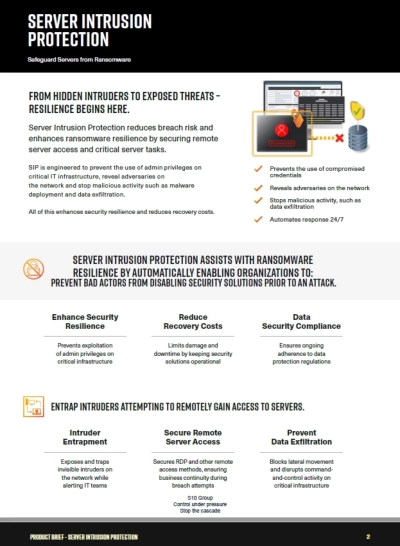
2. Server Intrusion Protection
Server
Intrusion
Protection
is
focused
on
one
of
the
most
common
and
consequential
early
breach
pathways:
remote
server
access.
Its
role
is
to
reduce
the
chance
that
compromised
credentials,
unauthorised
RDP
sessions,
or
malicious
server-side
activity
can be used to progress the attack toward deployment, reconnaissance, lateral movement, or data theft.
•
Secures remote server access with additional control measures
•
Reduces risk from compromised credentials and RDP abuse
•
Helps stop breach progression earlier in the sequence
•
Creates immutable records of access activity for investigation and audit
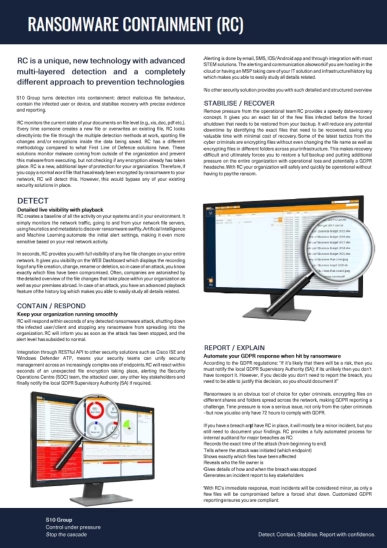
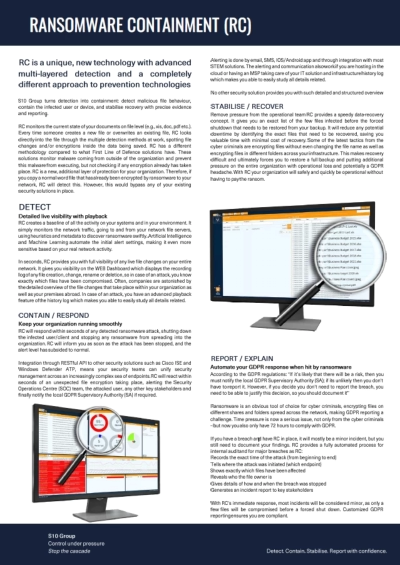
Ransomware
Containment
is
focused
on
active
encryption
behaviour
and
the
protection
of
critical
data
paths
and
infrastructure.
Its
role
is
to
detect
illegitimate
encryption
activity
quickly,
isolate
compromised
users
or
devices,
and
reduce
the
chance
that
an
outbreak spreads across file shares, application servers, database servers, or other business-critical systems.
•
Detects active malicious encryption behaviour
•
Isolates compromised users or devices automatically
•
Protects critical infrastructure and data paths
•
Supports compliance-ready reporting and recovery visibility
1.
S10 Group containment layer
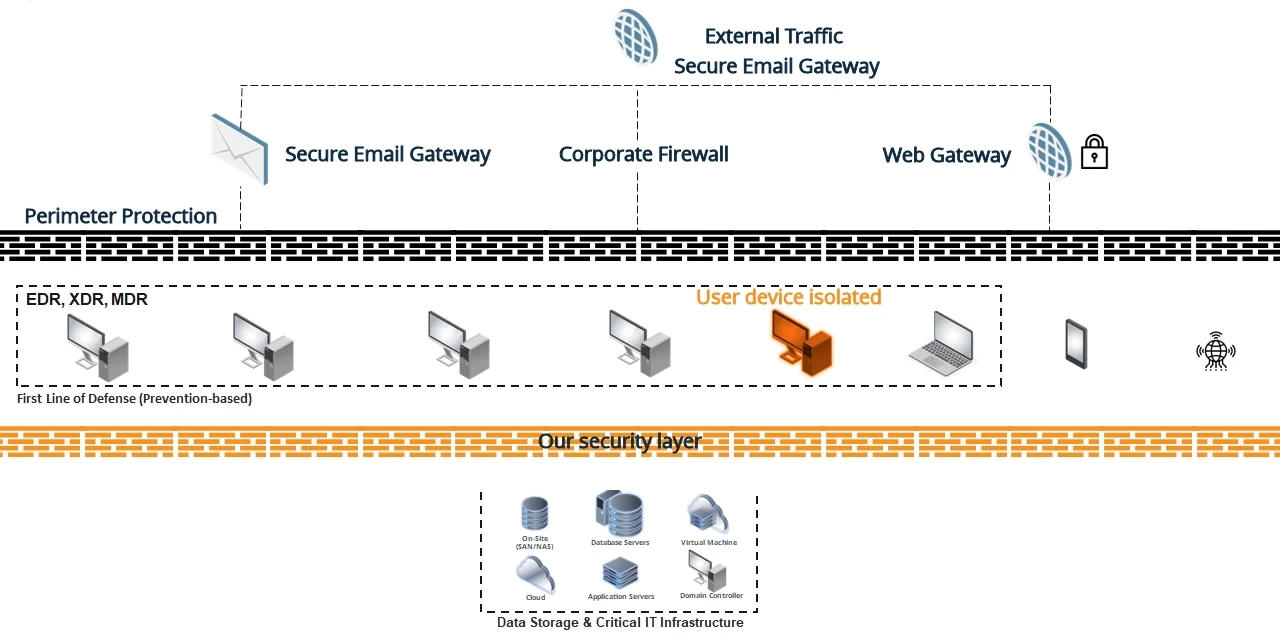
Our platform matters because it turns detection into immediate containment: it
identifies malicious lateral movement, interrupts encryption attempts, and stops
ransomware from cascading across the environment.
What our containment layer enables operationally
Relevance by industry




Compliance / Insurer-Readiness Support
Our platform also supports resilience priorities that matter in regulated and insured environments.
This
includes
clearer
incident
records,
stronger
evidence
of
access
control
and
operational
response,
and
a
more
defensible
containment
posture
in
environments
shaped
by
cyber-insurance
requirements,
sector
oversight,
and
frameworks
such
as
GDPR,
NIS2, and DORA.
The value is not that our platform says you are resilient. It helps you demonstrate
more real control when resilience assumptions are tested.
How exposed is your organisation?
Most organisations are not lacking security controls.
The real gap appears when speed, trust, and control come under pressure.



Run a free resilience assessment
See how much control your environment can still hold once prevention has already been bypassed.
Run
a
controlled
resilience
assessment
to
understand
where
your
current
stack
is
strong,
where
the
containment
gap
still
exists,
and what changes when malicious behaviour can be interrupted earlier.




One platform, three operational protection layers.
Ransomware Containment
Interrupts
active
ransomware
behaviour,
isolates
compromised
users
or
devices,
and
helps
prevent
encryption
from
spreading
across
critical infrastructure.
Server Intrusion Protection
Protects
remote
server
access,
reduces
breach
progression
through
compromised
credentials
and
RDP-
related
pathways,
and
helps
stop
attackers
before
deployment
stages
widen the incident.
Virtual Server Protection
Protects
virtual
environments
such
as
VMware
and
ESXi
from
unauthorised
access,
malicious
activity,
encryption
attempts,
and
wider
operational
disruption.





Our platform interrupts malicious behaviour
before it can spread, encrypt, or force wider
operational shutdown.
The real resilience gap is not detection. It is
preventing one compromised point from
becoming the whole organisation’s problem.


One platform. Three operational protection
layers.
One purpose: stop the incident from turning
into cascade.
Together,
these
capabilities
create
an
additional
containment
layer
focused
on
what
happens
after
entry
risk
becomes
real:
hostile
movement,
active
encryption,
unsafe
access
paths,
and
the
widening
of
blast radius across critical systems.
How our platform fits into your
existing stack
Our
platform
is
designed
to
complement
your
security
stack
already
in
place.
It
is
not
intended
to
replace
prevention,
monitoring,
or
recovery
tooling.
It
sits
alongside
them
as
a
dedicated
operational
containment
layer,
helping
organisations
act
when
speed,
trust,
and
blast
radius
matter
most.
It
integrates
with
any
SIEM,
NAC
or
other
security
solutions
via
2-way
RESTful
API
and
is
fully
compatible
with
your
existing
security
environment.
Its
value
lies
in
making
those
environments
more
governable once pressure becomes operational.
Our platform strengthens the value of the stack
you already have by helping it become more
executable under pressure.
Our platform is not there to describe the
incident better.
It is there to help change its trajectory.
Core capabilities at a high level:
three operational protection layers
Modern
ransomware
does
not
start
with
encryption.
It
starts
with
access,
reconnaissance,
lateral
movement,
data
discovery,
backup
interference,
and
preparation
for
impact.
Encryption
is
often
the
visible
end
of
a
process
that
has
already
been
unfolding inside the environment.
S10
Group
is
designed
for
that
active
phase:
when
malicious
behaviour
is
already
present,
but
spread,
exposure,
and
operational
impact
can
still
be
contained.
Our
containment
layers
help
organisations
move
from
detection
to
action
by
focusing
on
three
operational layers:
Reduce spread
Contain
movement
before
ransomware
reaches
more
users,
servers,
file
shares,
or
virtual
environments.
Protect data
Limit
suspicious
access
and
data
movement
before
stolen information becomes additional leverage.
Preserve operations
Protect
critical
systems
and
maintain
room
to
operate while the incident is being stabilised.
3. Virtual Server Protection
Virtual
Server
Protection
is
focused
on
virtual
infrastructure
such
as
VMware
and
ESXi
environments.
Its
role
is
to
reduce
the
risk
that
attackers
can
use
privileged
access,
malicious
processes,
or
encryption
attempts
to
render
virtual
environments
inaccessible
or
to
damage
the
systems that support wider business continuity.
•
Protects
virtual
environments
from
unauthorised
access and encryption attempts
•
Monitors
malicious
process
activity
and
system-
file corruption risk
•
Helps
contain
threats
targeting
VMware
and
ESXi
environments
•
Supports
24/7
automated
response
and
stronger
virtual-environment resilience
Below
you
will
find
flyers
in
PDF
format,
with
more
detailed
information
about
each
of
these
three layers.
2. Server Intrusion Protection
Server
Intrusion
Protection
is
focused
on
one
of
the
most
common
and
consequential
early
breach
pathways:
remote
server
access.
Its
role
is
to
reduce
the
chance
that
compromised
credentials,
unauthorised
RDP
sessions,
or
malicious
server-side
activity
can
be
used
to
progress
the
attack
toward
deployment,
reconnaissance,
lateral
movement,
or
data theft.
•
Secures
remote
server
access
with
additional
control measures
•
Reduces
risk
from
compromised
credentials
and
RDP abuse
•
Helps
stop
breach
progression
earlier
in
the
sequence
•
Creates
immutable
records
of
access
activity
for
investigation and audit
Ransomware
Containment
is
focused
on
active
encryption
behaviour
and
the
protection
of
critical
data
paths
and
infrastructure.
Its
role
is
to
detect
illegitimate
encryption
activity
quickly,
isolate
compromised
users
or
devices,
and
reduce
the
chance
that
an
outbreak
spreads
across
file
shares,
application
servers,
database
servers,
or
other
business-critical systems.
•
Detects active malicious encryption behaviour
•
Isolates
compromised
users
or
devices
automatically
•
Protects critical infrastructure and data paths
•
Supports
compliance-ready
reporting
and
recovery visibility
1.
S10 Group containment layer
Our platform matters because it turns
detection into immediate containment: it
identifies malicious lateral movement,
interrupts encryption attempts, and stops
ransomware from cascading across the
environment.
What our containment layer
enables operationally
Relevance by industry
Compliance / Insurer-Readiness
Support
Our
platform
also
supports
resilience
priorities
that
matter in regulated and insured environments.
This
includes
clearer
incident
records,
stronger
evidence
of
access
control
and
operational
response,
and
a
more
defensible
containment
posture
in
environments
shaped
by
cyber-insurance
requirements,
sector
oversight,
and
frameworks
such as GDPR, NIS2, and DORA.
The value is not that our platform says you are
resilient. It helps you demonstrate more real
control when resilience assumptions are
tested.
How exposed is your organisation?
Most organisations are not lacking security controls.
The
real
gap
appears
when
speed,
trust,
and
control
come under pressure.






See how control holds in your organisation
Run a free resilience assessment
See
how
much
control
your
environment
can
still
hold once prevention has already been bypassed.
Run
a
controlled
resilience
assessment
to
understand
where
your
current
stack
is
strong,
where
the
containment
gap
still
exists,
and
what
changes
when
malicious
behaviour
can
be
interrupted earlier.





One platform, three operational
protection layers.
Ransomware Containment
Interrupts
active
ransomware
behaviour,
isolates
compromised
users
or
devices,
and
helps
prevent
encryption
from
spreading
across
critical infrastructure.
Server Intrusion Protection
Protects
remote
server
access,
reduces
breach
progression
through
compromised
credentials
and
RDP-
related
pathways,
and
helps
stop
attackers
before
deployment
stages
widen the incident.
Virtual Server Protection
Protects
virtual
environments
such
as
VMware
and
ESXi
from
unauthorised
access,
malicious
activity,
encryption
attempts,
and
wider
operational
disruption.